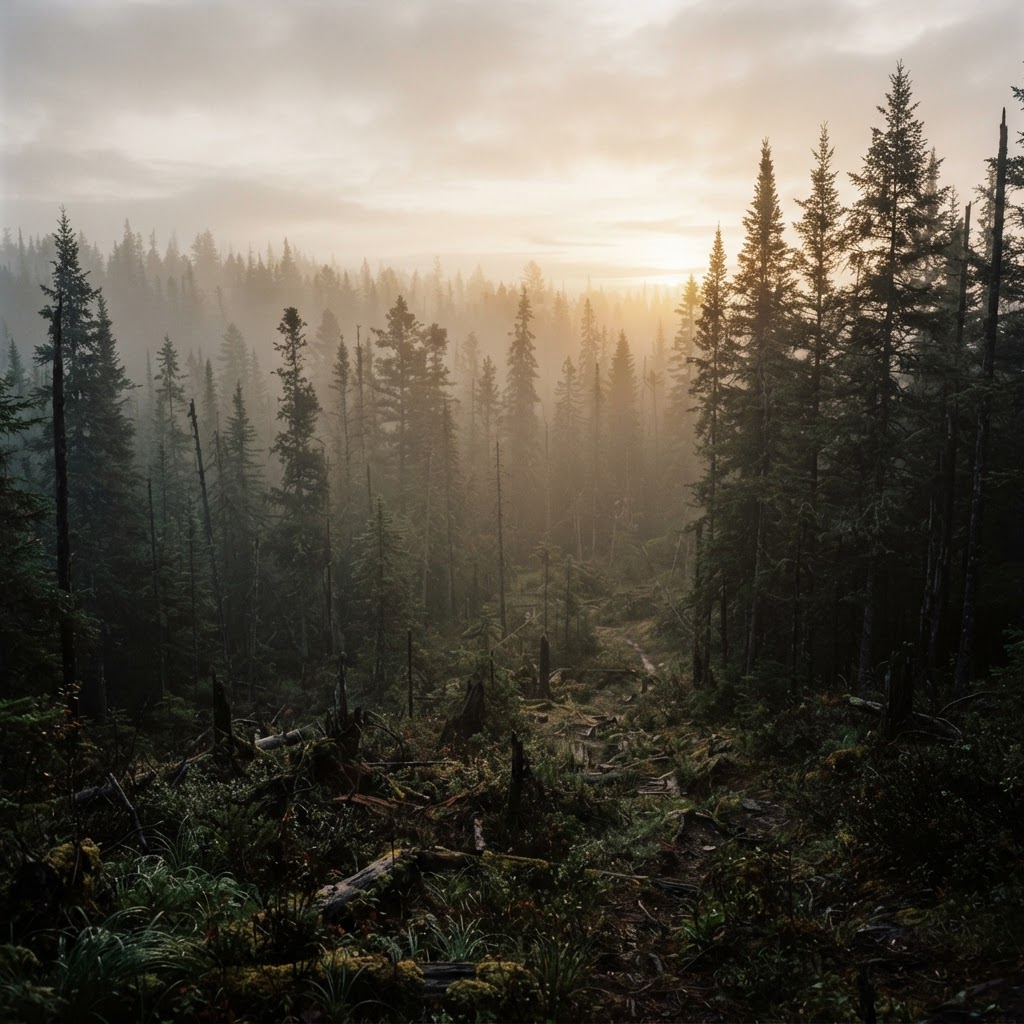
Know YourOperational Theater
Every species below has been documented in active industrial work zones across western and northern North America. Understanding their behavior, indicators, and diversion protocols is non-negotiable for safe field operations.
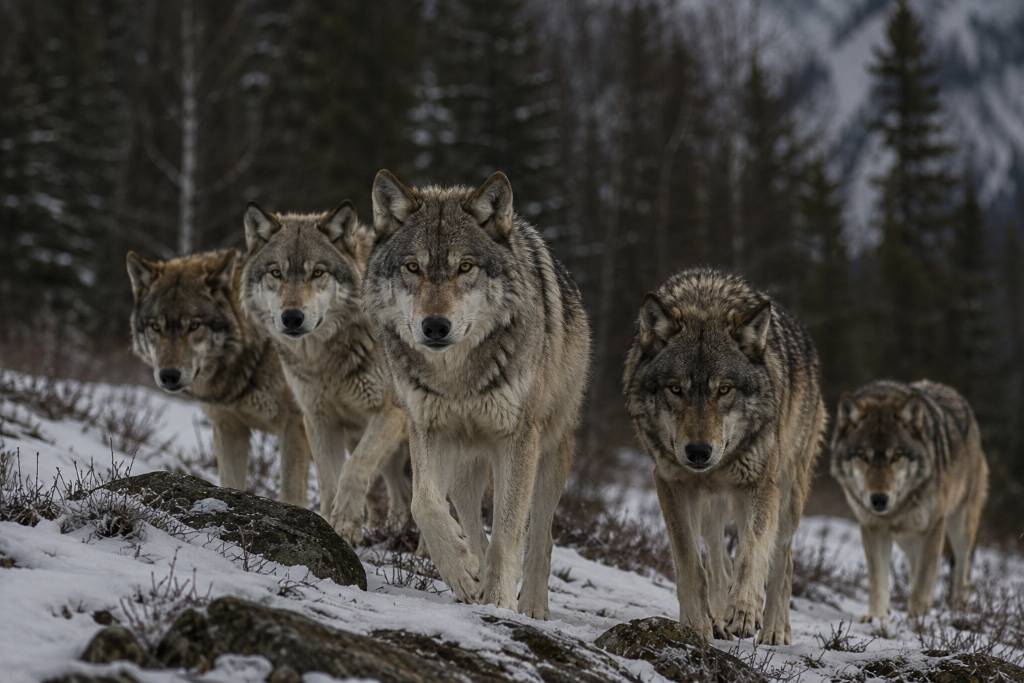
Gray Wolf
Wolves are highly intelligent pack hunters. In remote work settings they may approach out of curiosity or food conditioning. Aggression toward humans is rare but increases significantly around denning season (April–June) and when habituated to human food sources.
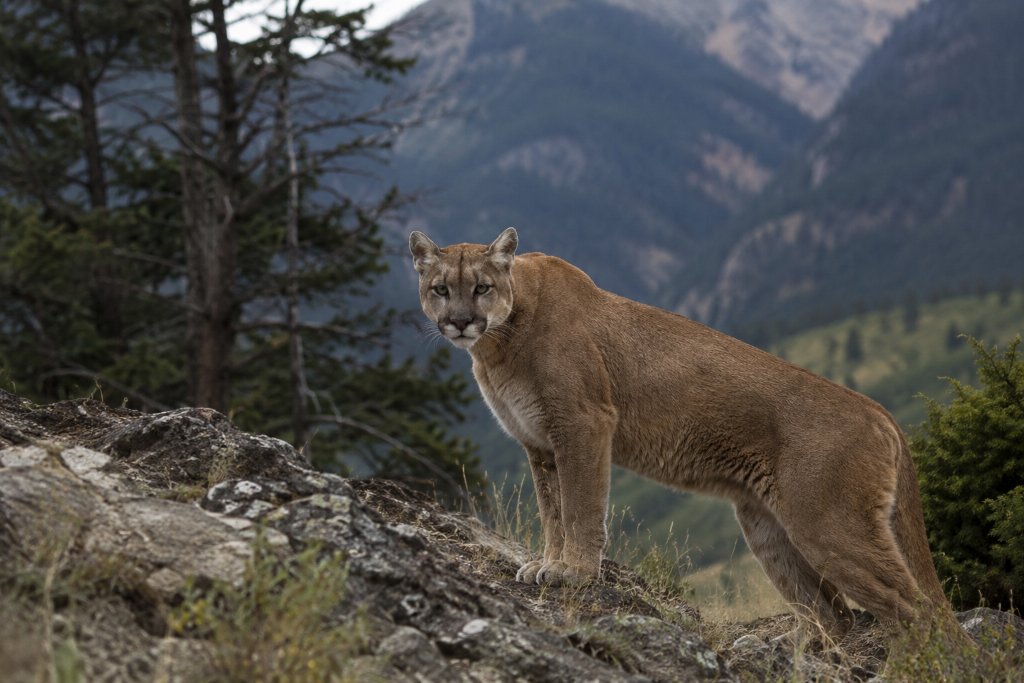
Cougar
Cougars are solitary, ambush predators. They are most active at dawn, dusk, and night. Unlike bears, cougars that stalk humans are displaying predatory — not defensive — intent. Solo workers and small groups in shrubby or rocky terrain face the highest risk.
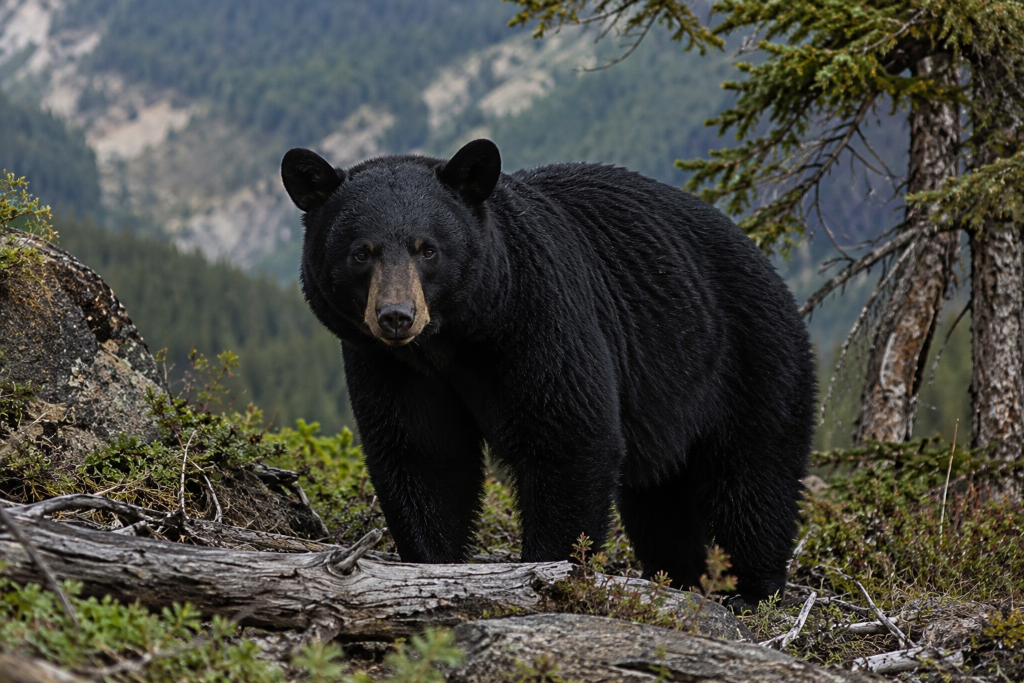
Black Bear
The most common large predator encountered on industrial sites. Black bears are opportunistic omnivores highly motivated by food. Most encounters are defensive; predatory attacks are rare but do occur, particularly from males in spring when natural food is scarce.
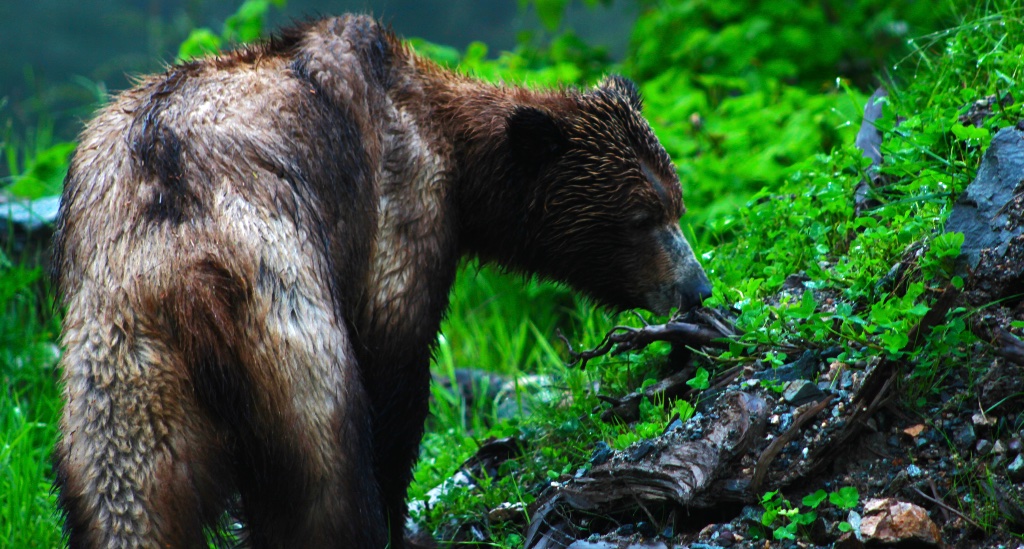
Grizzly Bear
Grizzlies are significantly more aggressive than black bears when surprised or defending cubs and food caches. They are the primary reason wildlife monitors carry firearms on industrial sites in western Canada. Hyperphagia in fall (August–October) drives grizzlies into extended foraging close to human activity.
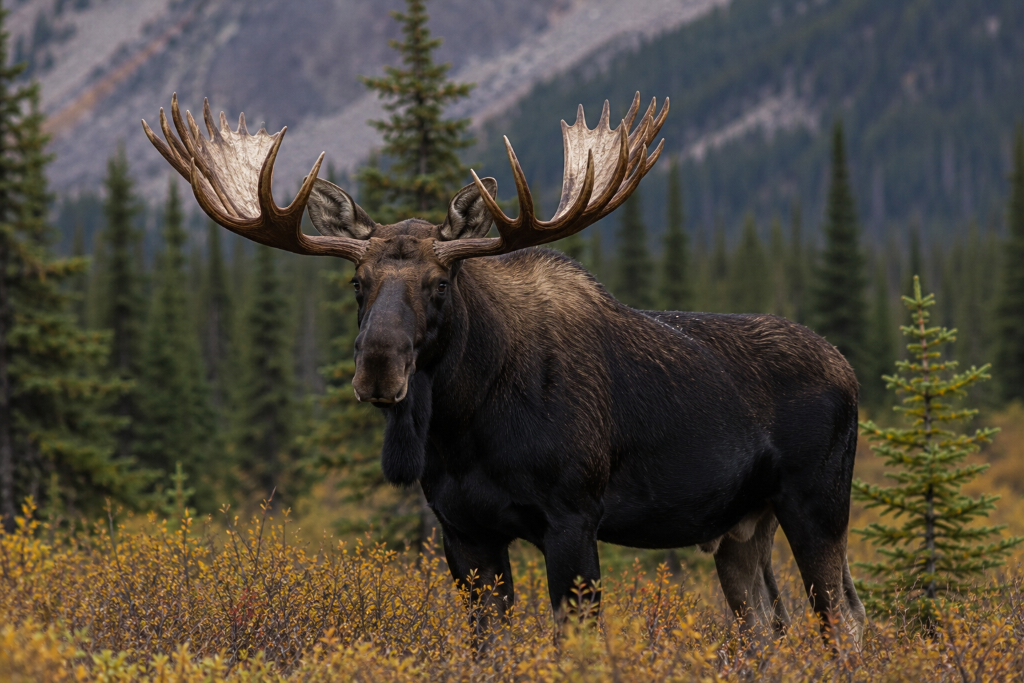
Moose
Moose are responsible for more human injuries in North America than any other large mammal. Statistically underestimated as a threat on industrial sites. Cows with calves and bulls in rut (September–October) are unpredictable and highly dangerous. They do not bluff — a charge is typically a full contact event.
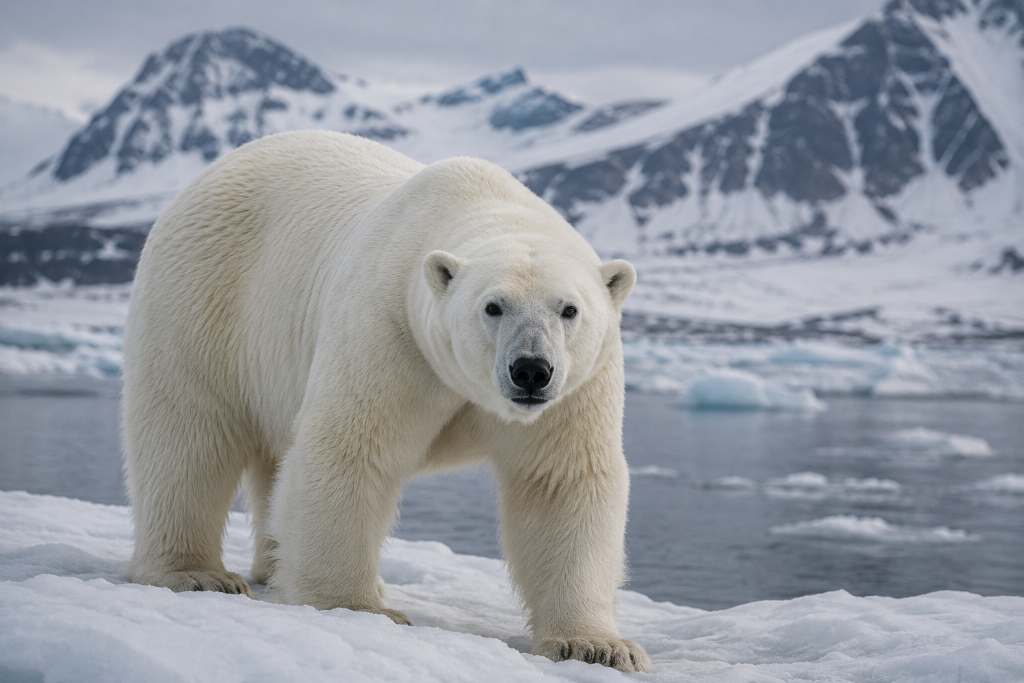
Polar Bear
Polar bears are the only bear species known to actively hunt humans as prey. They are apex predators with no natural fear of people. Climate-driven sea ice loss is increasingly pushing them onto land and into contact with Arctic industrial operations. Any polar bear that approaches is investigating you as potential food — a stalking bear is a predatory bear.
Know the DifferenceBefore You Respond
Not every charge is the same. The correct response depends entirely on what is driving the animal — and misreading it can be fatal.
Defensive Attacks
The animal reacts to a perceived threat — a surprise encounter, a protector guarding cubs or a food cache. The attack is reactive and ends when the threat retreats. Black and grizzly bears defending young or kills are the classic example; the encounter escalates fast but is not premeditated.
Protective Attacks
Triggered by guarding territory, a mate, or offspring — moose defending calves and sows with cubs are the most common. The animal's goal is to neutralize the intruder, not to feed. Distance and early detection are your only reliable defense.
Predatory Attacks
The animal views the human as prey. Far rarer but the most lethal: cougars that stalk, and polar bears that investigate humans as food. There is no provocation — the approach is deliberate and silent. Predatory attacks require a completely different response: fight back, never play dead.
Why These ToolsMatter in the Field
Remote work sites are far from emergency response. Each tool in a wildlife monitor's kit fills a specific role in a tiered diversion strategy — working together so lethal force is almost never needed.
Bear Spray
The single most effective non-lethal tool at close range — more reliable than firearms under stress. A wide capsaicin cloud stops a charging bear the majority of the time without lasting harm to the animal or the operator.
Air Horns
The first line of defense — high-decibel acoustic deterrents displace wildlife from work perimeters before contact occurs. Ideal for early-stage encounters where a bear or moose is simply moving through the area.
Firearms
Carried solely to preserve human life when every non-lethal method has failed and an attack is imminent. Only qualified, trained operators deploy them — lethal force is the line in the sand, never the first option.
Familiarity Doesn't Mean Safety
When wildlife is allowed to linger inside a worksite — a pipeline right-of-way, a clearing, an active laydown yard — the animal learns a dangerous lesson: humans are not a threat. Day after day of uneventful coexistence, that bear or moose stops treating the crews as something to avoid and starts treating them as part of the landscape. The fear response that kept both sides at a safe distance quietly erodes.
That same erosion happens to the crews. Workers begin to treat a bear bedded down at the treeline as routine — a photo opportunity instead of a hazard — and let their guard down. When the animal eventually behaves like a wild animal again — startled, cornered, protecting young, or hungry — no one is ready. Complacency on both sides is exactly what turns a manageable encounter into a fatal one. This is why tolerating wildlife on a worksite is never the safe option.
Avoidance Is the Mission
The best outcome on a remote site is an encounter that never happens. Professional wildlife monitors stay at the ready — scanning perimeters, reading sign, and displacing animals before crews ever cross paths with them. A monitor's job is not to win a confrontation; it is to make sure the confrontation never starts. Early detection and a trained observer on site are the difference between a routine shift and a fatal incident.
Wildlife-Proof Your Camp
Bear-proof containers, secured waste management, and clean cooking protocols are not optional on a remote camp — they are the foundation of site safety. Every unsecured food source, every open dumpster, and every carelessly stored smell is an invitation. A bear that finds one reward will return, and will teach that behavior to others. Control the attractants and you control the encounter rate.
Habituated Wildlife Is Disaster
Wildlife that has lost its natural fear of humans is the single most dangerous variable on a remote work site. An animal conditioned to associate camps, vehicles, and workers with food stops responding to normal diversion and approaches with no wariness — the exact scenario where lethal force becomes unavoidable. Habituation is a one-way door: once an animal is food-conditioned, relocation often fails and the outcome is almost always lethal for the animal.
Prevent the Conditioning
This is precisely why Apex Predator Solutions monitors enforce strict attractant discipline on every deployment. By keeping wildlife wild — never letting an animal earn a reward near human activity — we protect your crews and the animals alike. Prevention is cheaper, safer, and more humane than any reaction that comes after the fact.
Wildlife AttacksNorth America 2010–2026
Documented attacks on humans by species across North America. Data compiled from Canadian Wildlife Service, USGS, provincial game authorities, and peer-reviewed incident databases. Moose consistently represent the highest contact rate — a threat often underestimated in safe work planning.
* Figures represent reported incidents including charges, maulings, and fatalities. Unreported incidents are estimated to be 2–3× higher. Data is approximate and for situational awareness purposes.